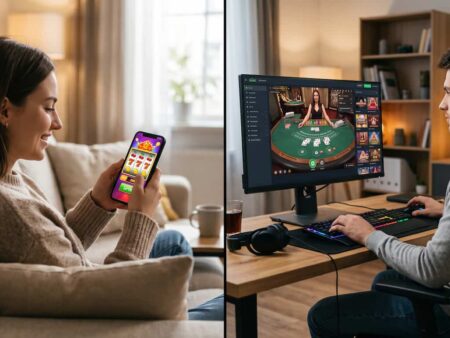




Today, we will talk about the psychology of online gambling in Iraq. When you are playing casino games, there is a lot of uncertainty, anticipation, and the involvement of real money activates the brain’s reward system. On this page, we will discuss how online casinos are designed to influence Iraqi players, what are the key psychological mechanisms behind gambling behavior, and why gamblers keep playing even after losing, particularly the psychology of online gambling in Iraq. We will dive deep into the skulls of Iraqi players and how sports betting psychology is any different among them. We will also be discussing the accessibility of online gambling, which poses even further risks for addictive behaviors.
Disclaimer: we are talking about the psychology of online gambling, but the casinos that we recommend to you take responsible gambling very seriously, and take all kinds of measures to prevent and help players who may have tendencies toward addictive behaviors. Iraqbet is not here to promote such behavior; we are here to promote responsible and safe gambling.

Bonus up to
$3,000

Bonus up to
$3,500 + 200 FS

Bonus up to
$1,500 + 100 FS

Bonus up to
$2,034 + 290 FS

Bonus up to
$5,000

Bonus up to
€1500 + 150 FS

Bonus up to
$1,600+ 150 FS

Bonus up to
$1,713 + 150 FS

Bonus up to
$4,000

Bonus up to
$1,750 + 150 FS

No Welcome Bonus

Up to $115



Welcome Bonus
100% up to $300

No Welcome Bonus

Bonus up to
$1,739 + 150 FS

Bonus up to
200 Free Spins


No Welcome Bonus
How Online Casinos Are Designed to Influence Iraqi Players: The Psychology of Casinos
Online casinos are not just games. Trust us when we say they are carefully crafted and engineered environments that shape player behavior. Every design, every visual element, and every bonus activates that brain stimulation and stimulates the brain to want more. Here are the three main features that online casinos focus on to attract Iraqi players and keep them playing.
Visual and Sound Triggers
Casinos understand the psychology of online gambling well; thus, they use visual and sound triggers to activate the brain’s reward system in the Iraqi player. For example, they use bright colors, such as red, gold, and neons, that are directly associated with energy, urgency, and reward. During winning moments, you see flashing lights and animations, exaggerating the amount won, as well as sound effects during the win, like the sound of coins dropping and celebratory music, all creating a bigger illusion in the brain of the Iraqi player.
Speed and Instant Gratification
We will talk in detail about the psychology of online gambling nowadays and how speed is affecting it. Casinos rely on this to create a loop inside the brain of the Iraqi gambler. The spins happen in seconds, the results are instant, and players can place multiple bets within seconds. So your brain creates this loop of action ➝ result ➝ action ➝ result ➝ action ➝ result. The faster the loop is, the less time the brain has to reflect or make rational decisions. Instead, players act on impulse.
Bonuses and Psychological Hooks
This is one of the biggest strategies that casinos use to manipulate the psychology of online gambling players. Free spins, for example, create a no-risk illusion. Deposit bonuses make you feel like you’re getting extra value. Limited-time offers create a certain urgency in the mind of the Iraqi player and trigger the fear of missing out on an offer. With these labels, the player feels committed after depositing or does not want to waste the bonus and feels a perceived advantage from the word “Bonus,” so they go all the way in. In reality, bonuses come with strict terms and conditions to fulfill.

Psychological Mechanisms Behind Gambling: How The Player Thinks
We’ve covered how casinos think. Now let’s cover the psychology of online gambling players. Let’s see how powerful psychological mechanisms shape how players think, feel, and act. After all, these are not accidental; they are deeply rooted in human behavior, and the previous strategies we talked about by casinos amplify them.
Variable Reward System
The most dangerous thing in the psychology of online gambling is randomness. The technical term is the variable reward system. When the wins are random and unpredictable due to random number generators, the player doesn’t know when the next win will be. Interspersed between these alleged big wins are small occasional wins that keep your brain in an addictive state. This unpredictability and possibility trigger the brain to say, “Maybe the next one will be it.”
Cognitive Biases in Gambling
Another aspect of the psychology of online gambling is cognitive biases. These distort judgment and lead to irrational decisions while gambling. Let’s take a look at what they are:
- The illusion of control: Players feel like they are in control because they can choose when to spin. They can pick lucky numbers, hot numbers, or whatever, and they can use personal strategies. But in reality, casino games are based on random outcomes, so there is no control. The player does not control the outcome.
- Gambler’s fallacy: This is one of the common issues in the psychology of online gambling. Players believe that after losing several times, a big win must be coming. But again, each spin is independent of the other. The odds remain the same every time.
- Overconfidence: This is especially common among Iraqi players in sports betting because they believe that their knowledge or experience gives them an edge, and they overestimate their ability to predict the outcome of the game. Even though this might sometimes be true, this overconfidence triggers them to make bigger bets and take higher risks.
The Near-Miss Effect
Another dangerous gambling behavior triggered in Iraqi players is near wins. For example, let’s say you got five symbols to get a big win, but you just missed one. You were so close, so you should try again—that’s what your brain tells you, instead of discouraging you. Your brain convinces you that the win is right around the corner because you were so close to getting it the first time, so you must keep playing.
Tapping Negative Gambling Behavior: Why Players Keep Playing Even After Losing?
The most dangerous gambling behavior is to keep playing after losing. This is one of the most important aspects of the psychology of online gambling. Instead of stopping, players become more involved. Here’s why:
- Chasing Losses: After a losing streak, players react as if they just need one good win to recover everything. So players start to increase their bets and play longer sessions, becoming more aggressive risk-takers. The problem with this behavior is that it often leads to even bigger losses. Instead of being at a small loss, you may end up blowing your entire savings—or worse.
- The Sunk Cost Fallacy: The sunk cost fallacy is the belief that you should continue something because you have already invested time or money into it. SO your brain tells you “I’ve already spent so much—I can’t stop now.”
- Emotional Decision-making: The psychology of online gambling heavily focuses on human emotions of stress, frustration and hope. When these three gambling behaviors unite in a session, all logical thinking goes down the drain. Instead, impulsive decisions occur and players find themselves taking risks they did not expect.
Psychology of Online Gambling: Why Online Gambling Is More Addictive
The psychology of gambling in land-based casinos differs from the psychology of online gambling because online casinos have a different structure than land-based casinos, thus invoking more addictive gambling behavior in players due to these four main reasons:
- 24/7 access: Online casinos are accessible 24/7, so you can just log in, deposit, and play, unlike land-based casinos that open at certain times and have location restrictions. In Iraq, for example, there are no extravagant Las Vegas-style casinos, so the only resort is online.
- Mobile gambling: Most software providers develop casino games to be lightweight and mobile-friendly, so the player can access all the features available on desktop via mobile. There is no need for a laptop or desktop computer; instead, you can gamble online on your phone while waiting for the bus, during lunch breaks, or whenever and wherever.
- Privacy and anonymity: Online gambling allows players to maintain privacy and anonymity, which can encourage riskier behavior because there is less social oversight or judgment compared to being in a physical casino.
- Faster gameplay: Online casinos offer rapid spins and instant results, creating a fast loop of action and reward. This speeds up decision-making, reduces reflection, and increases impulsive betting, which can intensify addictive tendencies.
The Psychology of Online Gambling in Iraq: Factors That Motivate Iraqi Players to Gamble More
In Iraq, the psychology of online gambling is particularly dangerous. In a country where the economy isn’t thriving and there are strict religious rules, gambling becomes a door of hope and freedom, allowing players to escape economic and cultural pressures.
Legal and Religious Influence
In general, Iraq is considered an Islamic country, and officially, all forms of gambling are illegal, even though you might find some casino cafes that secretly operate. This stigma—that something is haram or illegal—makes the player want a taste of that forbidden fruit. Our brains are wired to want what we cannot have. With so many legal restrictions, gambling becomes more enticing for the Iraqi player.
Online Anonymity and Hidden Behavior
Since it’s illegal, it forces our gambling behavior to be secretive. When we do something in secret, anonymously, with no one knowing, no one can monitor us, notice our behavior patterns, or understand the psychology of our online gambling. As a result, Iraqi players tend to gamble more because none of their friends or family know about this pattern. However, if the online casino in Iraq is trustworthy and truly cares for the well-being of its players, it will monitor behavior and actions, and if it sees anything wrong, it will take action to support and guide the player.
Economic Pressure and Hope
Iraq is a country in economic turmoil. This plays a big role in shaping the psychology of online gambling among the locals. The citizens of Iraq struggle with unemployment, limited job opportunities, and heavy dependence on oil revenues, which makes income unpredictable and economic stability weak. About 17.5 % of Iraq’s population lives below the national poverty line, and many of the citizens live on $5.50 a day, which is barely enough given the inflation rates.
Sure, this does not apply to all families or all individuals. However, because of these economic realities, some Iraqi players may see online gambling not just as entertainment, but as a potential way out of hardship—a place where one big win, or even $50,000, could be life-changing compared to their low and unstable income.